Assessing a supplement always begins with: what is this doing, and where is the proof? Peer-reviewed, replicated, published in journals that survive the inconvenience of their own findings. The bar excludes observational claims dressed in white coat language with no controlled trial behind them. Most products cannot clear it.
Mitopure does. In my framework built around solving for E — energy as the output of terrain — mitochondrial quality is a condition of the equation rather than a footnote to it.
If you read The Mitochondria Threshold, you already know that arrival is the more challenging half of any cellular intervention — that a molecule circulating in the bloodstream and a molecule crossing into the mitochondrial matrix are two different events entirely. Mitopure sits in a parallel gap. The question here arises earlier in the chain: whether the compound can cross a membrane is irrelevant if your body never produces it to begin with.
The mechanism
Every cell in your body contains mitochondria — the organelles responsible for converting fuel into usable energy. They exist as a constantly cycling population: old and damaged mitochondria are cleared and replaced through a process called mitophagy. Think of it as cellular housekeeping at the deepest level. Without it, damaged mitochondria accumulate, energy output drops, inflammation rises, and the downstream effects reach every tissue that runs on metabolic demand — which is to say, all of them.
Mitophagy declines with age, beginning as early as our thirties — one of the twelve confirmed Hallmarks of Ageing, the framework built through decades of convergent research across independent laboratories worldwide. Declining mitochondrial quality is Hallmark Five. It is causally implicated in sarcopenia, cognitive decline, immune ageing, and reduced cellular resilience across the board.
What Urolithin A does is restore the signal that triggers mitophagy. Specifically, it activates the PINK1/Parkin pathway — the cellular mechanism responsible for tagging and clearing damaged mitochondria — a pathway that becomes progressively impaired as we age.
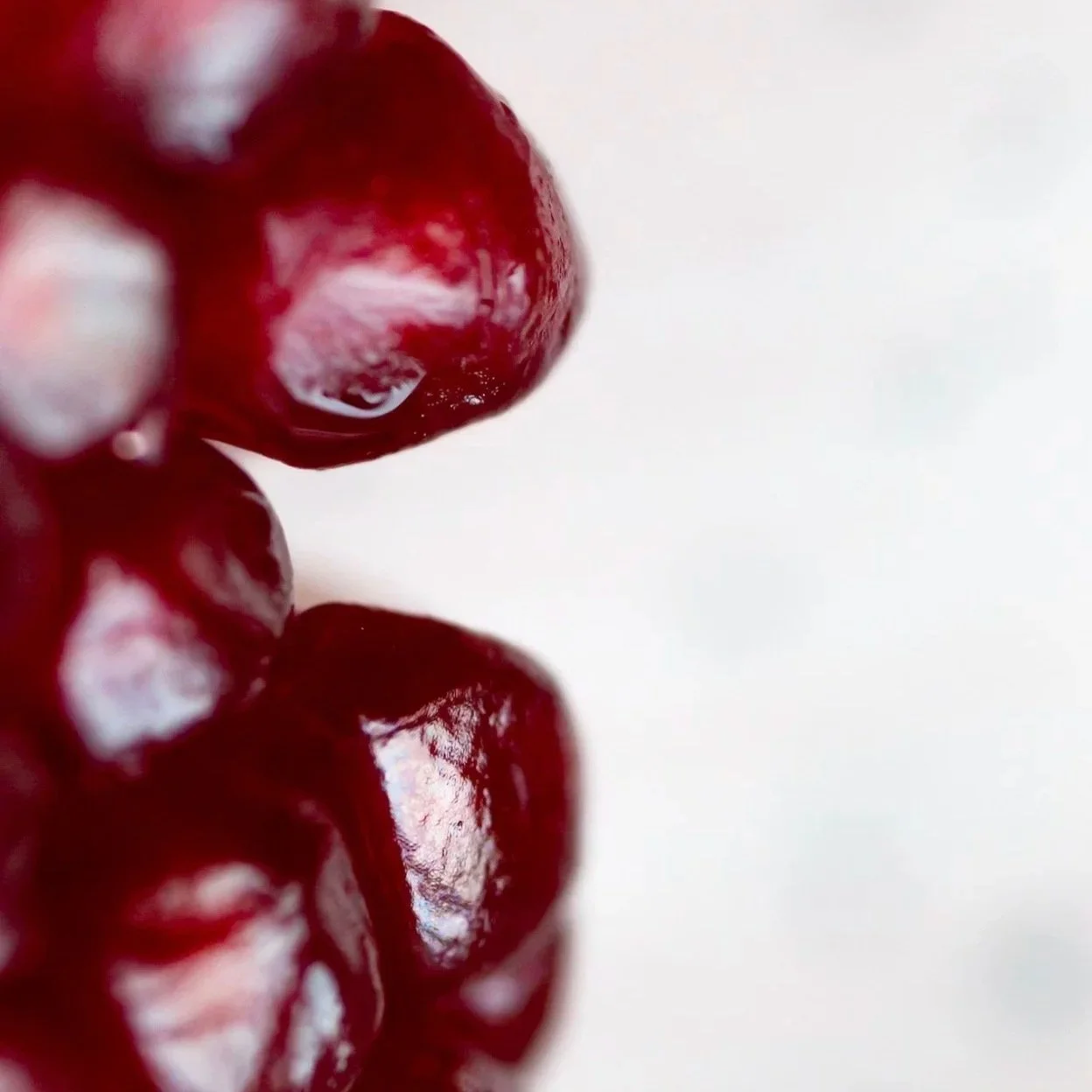
Urolithin A is a postbiotic: it is produced when gut bacteria metabolise ellagitannins, the polyphenols found in pomegranates, walnuts, and certain berries. Here is the complication. Studies consistently show that only around 40% of the population produces meaningful amounts of Urolithin A from food, due to significant variability in gut microbiome composition. Most people who eat pomegranate seeds and feel virtuous about it produce only the precursors, which go nowhere useful. The molecule the body needs and the molecule the body can make are not guaranteed to be the same thing.
Mitopure is a highly purified form of Urolithin A, developed by Amazentis — a Swiss biotech spun out of EPFL with eighteen years and more than fifty million dollars invested in this single molecule. Direct supplementation with Mitopure delivers roughly six times the Urolithin A achievable through dietary sources such as pomegranate juice, without the sugar load. It bypasses the gut conversion step entirely. This distinction — supplemental UA versus dietary ellagitannin consumption — is the mechanistic basis of the entire clinical programme, and it is GRAS-designated by the FDA, the only form of Urolithin A to hold that status.
The clinical evidence
The research behind Mitopure is among the most rigorous in the longevity supplement space. Twenty-five registered human trials, more than 2,200 participants — two-thirds of them women — and eighty-plus global patents sit behind this single compound. The peer review is real, the journals are credible, and the findings have been replicated and expanded across a growing body of independent research. Earlier this year, the programme was recognised as a top-40 winner in the Healthspan XPRIZE.
The foundational human trial was published in Nature Metabolism in 2019 — the first clinical demonstration that Urolithin A activates mitophagy in human skeletal muscle. Muscle biopsies confirmed upregulation of genes associated with mitophagy, mitochondrial biogenesis, and fatty acid oxidation: exactly the genes found to be downregulated in pre-frail elderly adults.
A subsequent randomised, placebo-controlled trial published in Cell Reports Medicine (2022) enrolled middle-aged adults for four months and showed approximately 12% improvement in muscle strength, clinically meaningful improvements in aerobic endurance (peak VO₂), and significantly reduced plasma acylcarnitines and C-reactive protein — markers of mitochondrial efficiency and systemic inflammation respectively. A separate trial in elderly participants confirmed significant improvements in muscle endurance across both hand and leg muscle groups compared to placebo at two months.
2025 widened the picture considerably. The MitoImmune trial, published in Nature Aging in collaboration with the Buck Institute and the Georg-Speyer-Haus Institute, was a double-blind, placebo-controlled study in healthy adults aged 45–70. Four weeks of 1,000mg Mitopure daily produced expanded naïve CD8+ T cell levels, reduced immune exhaustion markers, a measurable shift toward cleaner energy metabolism in immune cells, evidence of mitochondrial biogenesis, and enhanced immune-cell clearance activity. The conclusion: mitophagy activation via Urolithin A produces systemic immune remodelling — reducing what researchers call the immune ageing phenotype.
The ENDURO trial, published in Sports Medicine, evaluated Mitopure's effect on elite endurance athletes — highly trained male distance runners — over four weeks. Participants supplementing at 1,000mg daily showed lower exercise-induced muscle strain (measured by creatine kinase levels), improved perceived exertion during training, and elevated mitochondrial protein markers. A parallel pilot trial in academy-level soccer players showed statistically significant improvements in aerobic performance and lower-limb function after six weeks.
Beyond muscle and immune function, preclinical data published in iScience showed Urolithin A improved ejection fraction and cardiovascular biomarkers in heart failure animal models, and separately, reversal of anxiety-like behaviour in rats — suggesting the mitophagy mechanism may extend into heart tissue and neurological terrain in ways human trials have not yet fully mapped. The CLARITY trial — a 650-participant, randomised, double-blind, placebo-controlled study examining Mitopure's effects on cognitive function and brain health, the largest study ever conducted on the compound — is registered and underway, with results expected in 2026. A six-month, three-arm trial comparing 500mg, 1,000mg, and placebo on muscle strength and performance launched in late 2025, the longest dosing window tested to date. A parallel trial exploring Mitopure as a nutritional adjunct to cancer immunotherapy is also in progress.
This is a programme in active expansion, each year adding domain coverage that expands the original findings.
Why perimenopause specifically
Oestrogen has direct effects on mitochondrial function — on membrane integrity, bioenergetic efficiency, and the mitophagy signalling pathway itself. As oestrogen declines during perimenopause, general mitochondrial support diminishes, and the muscle mitophagy pathway is further impaired by the hormonal withdrawal itself. The quality control mechanism degrades on two axes at once.
A 2025 study of 407 perimenopausal and postmenopausal women, published in Frontiers in Endocrinology, found that reduced muscle mass index was directly associated with elevated menopausal symptom scores. The loss of muscle terrain and the severity of hormonal symptoms are entangled rather than parallel.
The PINK1/Parkin pathway that Urolithin A activates operates on its own axis, independent of oestrogen. During hormonal transition, when oestrogen can no longer provide its mitochondrial support, Urolithin A addresses the underlying decline through a mechanism that remains available regardless of where you are in the hormonal trajectory. With two-thirds of Mitopure's trial participants being women, this is not a population the research treats as an afterthought.
Sarcopenia in women begins in the late thirties, well before menopause, and the hormonal shift accelerates a process already underway. Slower exercise recovery, reduced strength retention, the sense that you are working as hard as ever but the return is diminishing — these are signals of accumulated mitochondrial damage in muscle tissue. The question is whether there is an intervention that addresses the mechanism rather than the symptom alone.
Where it sits in my framework
Within the Cellular Energy Terrain — the sub-cellular translation layer of my Total Load Concept — Urolithin A occupies a distinct position from other cellular energy interventions. In the E = MC²L framework, it sits at the base of the E: not a stimulus, but a condition without which the energy equation cannot resolve cleanly.
AmCELL (Nutrilite's botanical blend of pagoda tree flower, gooseberry, chokeberry, pomegranate, and dendrobium orchid) approaches cellular health through whole-plant phytonutrient diversity rather than an isolated, purified compound. Mitopure addresses one specific mechanism within that broader cellular terrain: mitochondrial quality control, the removal of damaged mitochondria so the population running the energy cycle stays intact.
The two are not interchangeable. A whole-botanical blend and a purified, dosed postbiotic sit at different points on the same spectrum — one casting a wide net across plant compounds at variable concentrations, the other delivering a single, clinically validated mechanism at a known dose. Both may draw on pomegranate as a source plant, but only Mitopure isolates and concentrates the specific postbiotic shown in trials to activate mitophagy.
MitoQ, which I take in parallel and write about separately in The Mitochondria Threshold, addresses mitochondrial oxidative stress — the ROS accumulation inside mitochondria that accelerates damage in the first place, delivered through an entirely different arrival mechanism. Three distinct compounds, three distinct points of entry into the same terrain. None substitutes for the others.
What I noticed
I have been taking Mitopure for more than eight months, since early last year — timed deliberately so it would not overlap with the MitoQ testing window. I waited for the placebo period to pass and watched especially closely after that.
The honest account is unglamorous. There was no week where something switched on. What changed, somewhere between eight and twelve weeks in, was the texture of a hard week. The kind of stretch where stress load is high and by the end of it you are usually negotiating with your own body — and instead, the negotiation eased. I was still tired at the end of a demanding week. I simply recovered from it faster, in a way that held up across several such weeks rather than one good one.
I tested this by asking what would have to be true for this to be the supplement rather than simply a different stretch of life. Sleep was consistent across the period. Stress load, if anything, was higher than usual and kept rising through the period. The variable that had changed was the one thing I had added. That is not proof — nothing self-reported ever is — but it carries the same signal the trials describe: gradual, cumulative, visible mostly in recovery and in the absence of depletion rather than the presence of a lift.
What it feels like is the sense that my intrinsic energy is no longer running a deficit I had managed my life around. There was no stimulant feeling, no jolt, and I would be suspicious of anyone who reported one, because the mechanism does not work that way.
My expectations going in were modest, which matched the mechanism. Mitophagy activation works below the threshold of immediate sensation. You are systematically clearing cellular debris and replacing it with functional mitochondria, rather than flooding a receptor or spiking a pathway. The results compound over weeks and months, which is exactly what the clinical timelines show: measurable improvements at two months, more significant changes at four.
What I was watching for was recovery time, strength retention, and the fatigue that has nothing to do with sleep — the cellular depletion that shows up in the second half of a demanding week. Those are the signals of mitochondrial terrain. They are also the signals that are hardest to attribute to any single intervention, which is why care matters more here than enthusiasm.
On the product itself
Timeline offers Mitopure in softgels, powder, and — their most recent addition — strawberry-flavoured gummies. I alternate the softgels and powder and find it easy to stay consistent, whether or not I am travelling or otherwise managing a disrupted schedule. Consistency matters with this compound; the clinical benefits are dose-dependent and accumulate over time, so the format you can accommodate daily is the right one.
The compound is well-tolerated with no significant adverse effects reported across the clinical programme. The standard dose is 500mg daily; clinical trials have used 500–1,000mg. As with any intervention, if you are managing a specific condition or taking medication, the conversation with your practitioner should precede the purchase.
A practical note for readers outside markets Timeline ships to directly: a parcel-forwarding or mail-redirection service will get it to you. It is a common workaround for longevity products that have not yet built out regional distribution, and it adds a step rather than a barrier.
Mitopure is available through Timeline directly — softgels, powder, and gummies. The affiliate link is below.
The science does not need embellishment. Eighteen years of research, more than fifty million dollars invested, twenty-five human trials and counting, peer-reviewed across some of the field's most respected journals, with a programme that keeps expanding its domain coverage. The compound does one thing with demonstrated rigour: it restores mitophagy. The downstream effects of that restoration are what the trials are mapping, and the picture today is substantially larger than it was even two years ago.
This is the category of intervention — targeting the quality control machinery of the cell itself — that the supplement industry has historically struggled to discuss without overclaiming. The science holds, the mechanism is established, and my personal experience reflects this.
Use the link below — or the code MSLIGHT — for 20% off.